Everyone has sat through the meeting where the far end keeps asking the room to repeat itself. A laptop microphone is built to hear one person at arm's length; a meeting room asks it to hear six people across three metres of hard table. A proper conference phone solves this with hardware — and it is far cheaper than the collective hourly rate of the people shouting at the laptop.
What actually matters in the spec
- Full-duplex audio: both ends can talk at once without the phone clipping one of them. This is the single biggest quality difference and worth paying for.
- Microphone pickup radius: honest specs quote a radius per mic. Match the claimed radius to the distance from the phone to the farthest chair, then subtract a metre for optimism.
- Expansion mics: long boardroom tables need satellite microphones — one puck in the middle of a five-metre table hears the middle of the table.
- Noise and echo cancellation: glass walls and bare tables bounce sound; modern DSP handles it, cheap hardware does not.
Sizing by room, not by budget
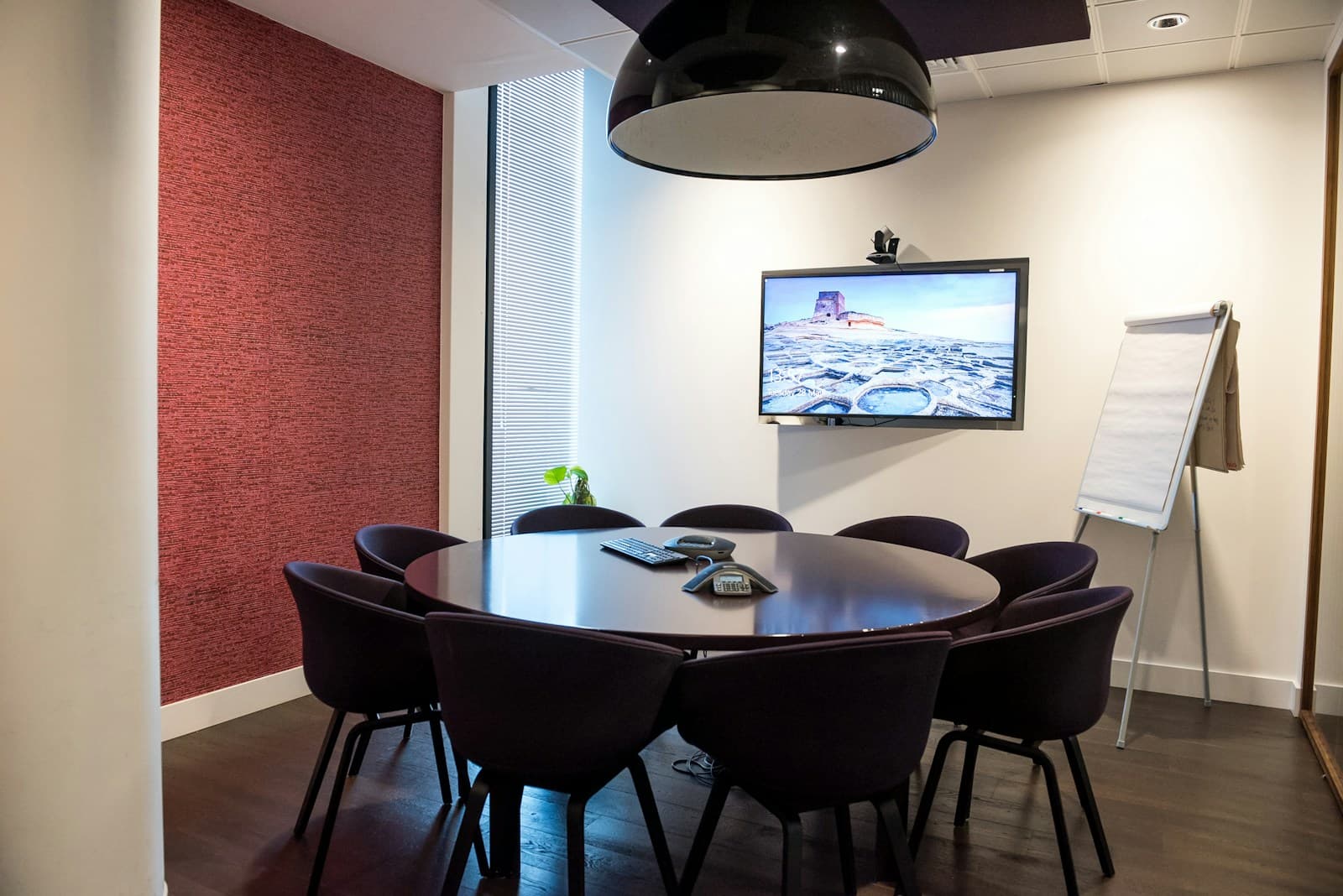
A huddle room for four needs nothing more than a compact unit in the middle of the table. A standard eight-seat room wants a mid-range phone with a wider pickup. The long boardroom needs expansion mics or a multi-unit setup. Buying one 'good' phone for all three rooms guarantees it is wrong in two of them.
Conference phones on RingPlus are extensions like any other — they auto-provision, join ring groups, and dial from the shared directory. Book the room, press one button, and the recurring project call starts itself.
The far end of the call cannot see your meeting room. They judge your entire company on what they can hear.
Kitting out your desks?
Talk to the team that provisions these phones every week.